Sunday, May 07, 2006

Technologist’s Breast Imaging Quiz (Entry level): Pathology

  1. Which of the following are potential causes of breast edema?

a) Cancer

b) Lymph obstruction

c) Inflammatory disease

d) Hodgkin’s lymphoma

e) All of the above

  1. Which of the following characteristics of calcification are usually benign?

a) Unilateral

b) Varied densities

c) Indian line

d) Dense

e) Tea-cup shaped

  1. Which of the following characteristics of masses are usually malignant?

a) Irregular margin

b) Follow parenchymal lines

c) Radiopaque

d) Radiolucent

e) Palpable

  1. Which of the following aspects of calcification usually require biopsy?

a) Decreased number

b) Lucent centers

c) Increased number

d) Decreased density

e) Rim

  1. Which of these masses would probably be benign?

a) Stellate

b) Fixed

c) Smooth margin

d) Indistinct margin

e) Feels larger than it appears

  1. Which of the following is a common cause of calcifications?

a) Necrosis

b) Atrophy

c) Fibrocystic change

d) Lipoma

e) Lymphedema

  1. A lipoma is:

a) Radiopaque

b) Firm/fixed

c) Malignant

d) Never seen mammographically

e) Radiolucent

  1. Which of the following is the most common neoplasm in the breast?

a) Cysts

b) DCIS

c) Internal mammary nodes

d) Fibroadenoma

e) Lipoma

  1. Which of the following aspects of calcification probably would NOT required follow-up?

a) Increased density

b) Lucent centers

c) Increased number

d) Varied sizes

e) Irregular borders

  1. Which of the following is a primary presentation of breast pathology?

a) Unilateral pain

b) Bilateral discharge

c) Asymmetry

d) Nipple inversion

e) Mass

  1. Which of the following characteristics of a mass is considered benign?

a) Dense

b) Encapsulated

c) Fixed

d) Firm

e) Indistinct

  1. Which characteristic of nipple discharge is clinically significant?

a) Creamy

b) Bilateral

c) Expressed

d) Spontaneous

e) Persistent

  1. Architectural distortion is:

a) Disruption in the natural flow toward the nipple

b) Converging radial lines

c) Radial scarring

d) Diametrically opposing parenchyma

e) Patterns from surgical scarring

  1. A malignant breast mass is usually

a) Occult

b) Mobile

c) Fixed

d) Oval

e) Smooth

  1. What is the most common breast symptom?

a) Mastaglia

b) Cysts

c) Dysplasia

d) Lump

e) Nipple discharge

  1. A simple cyst is:

a) Indefinite

b) Hallowed

c) Radiolucent

d) Ill-defined

e) Immobile

  1. An infiltrating carcinoma:

a) Feels smaller than it looks

b) Moves easily within the breast

c) Has smooth borders

d) Is very uncommon

e) Has a stellate presentation

  1. Paget’s Disease of the breast presents with:

a) A smooth mass

b) Low density calcifications

c) Morgagni’s tubercles

d) Eczema type rash

e) Stag-horn calcifications

  1. Unilateral red, hard, hot, extremely tender breast tissue might indicate:

a) Fibrocystic condition

b) Mastitis

c) Sunburn

d) LCIS

e) Fibroadenoma

  1. A tubular breast lesion is:

a) Benign

b) Common

c) Cystic

d) Bilateral

e) Malignant

SUMMARY:

I hope this little tech quiz has peaked your interest. If you had to guess at any of the answers all explanations are revealed in my manual “THE MAMMOGRAPHER’S COMPANION.” (If you think you or your department would benefit, you can order a copy directly from me. Send an email for details.). The simple answer key follows:

1. e)

2. d)

3. a)

4. c)

5. c)

6. a)

7. e)

8. d)

9. b)

10. e)

11. b)

12. d)

13. a)

14. c)

15. a)

16. b)

17. e)

18. d)

19. b)

20. e)

Thursday, April 20, 2006

Technologist’s Breast Imaging Quiz (entry level): Anatomy

  1. Where is the skin covering the breast normally the thickest?

a) Base

b) Areola

c) Nipple

d) Axillary tail

e) Equal thickness

  1. Which quadrant of the breast usually includes most of the glandular tissue?

a) Lower outer

b) Upper outer

c) No particular quadrant

d) Lower inner

e) Upper inner

  1. What term describes the fasciae bands that support the breast?

a) Cooper’s ligaments

b) Parenchyma

c) Superficial fascia

d) Pectoralis major

e) Deep fascia

  1. How many lobes are normally found in each breast?

a) 2-3

b) 5-10

c) 15-20

d) 30-35

e) over 35

  1. What term describes the cone shaped structure that lies just below the areola?

a) Ampulla

b) Inframammary fold

c) Retromammary space

d) Tail-of-Spence

e) Lactiferous duct

  1. Which of the following describes the junction between the inferior border of the breast and the anterior chest wall?

a) Axillary tail

b) Inframammary fold

c) Deep fascia

d) Retromammary space

e) Tail-of-Spence

  1. What term describes the area between the posterior aspect of the glandular tissue and the anterior aspect of the pectoralis muscle?

a) Axillary tail

b) Inframammary fold

c) Lactiferous ducts

d) Cooper’s ligaments

e) Retromammary space

  1. Which of the following terms describe the embryologic origin of the female breast?

a) Mammalian

b) Hair follicle

c) Sweat gland

d) Skin pore

e) Sebaceous gland

  1. Which of the following is an effect of estrogen?

a) Lobular proliferation

b) Lobular regression

c) Parenchymal fatty replacement

d) Ductal proliferation

e) Involution of the senescent breast

  1. The physiologic function of the breast is performed by…

a) The glands

b) The tubercles

c) The lobes

d) The acini

e) The lobules

  1. The distal portion of the ductal system + the acini make up…

a) The segments

b) The glands

c) The TDLU

d) The lobules

e) The ductules

  1. The ductules are part of the…

a) Terminal duct lobular unit

b) Lymph system

c) Lobes

d) Cooper’s ligaments

e) Branching ducts

  1. The functional mammary tissue is divided into 15-20…

a) Acini

b) Lobules

c) Ducts

d) Nodes

e) Lobes

  1. The portion of the breast that extends laterally and superiorly from the centre is commonly termed…

a) Axillary nodes

b) The upper quadrant

c) The axilla

d) The tail

e) The Ampulla

  1. Which borders of the breast are most mobile?

a) Superior/inferior

b) Medial/lateral

c) Inferior/lateral

d) Inferior/medial

e) Superior/lateral


SUMMARY:

I hope this little tech quiz has peaked your interest. If you had to guess at any of the answers all explanations are revealed in my manual “THE MAMMOGRAPHER’S COMPANION.” (If you think you or your department would benefit, you can order a copy directly from me. Send an email for details.). The simple answer key follows:

1. a)

2. b)

3. a)

4. c)

5. a)

6. b)

7. e)

8. c)

9. d)

10. d)

11. c)

12. a)

13. e)

14. d)

15. c)


Technologist’s Breast Imaging Quiz (Intermediate Level)


  1. The most common form of breast cancer is:

a) Ductal

b) Lobular

c) Medullary

d) Paget’s

e) Papilloma

  1. Skin thickening of the breast is caused by:

a) Cancer

b) Fat

c) Blocked lymph ducts

d) Paget’s

e) Lactation

  1. The greatest risk for developing breast cancer within a life time is:

a) Family history of breast Ca

b) Personal history of Ca

c) Not breast feeding

d) High fat diet

e) Gender

  1. The post irradiated breast has:

a) Less risk of breast cancer

b) More risk of breast cancer

c) No risk of breast cancer

d) High risk of Peau d’Orange

e) Significant scarring

  1. A primary sign of breast cancer is:

a) Swelling or bulging

b) Clear nipple discharge

c) Skin irritation

d) Change is a mole or skin lesion

e) Persistent pain


  1. Which of the following is NOT secondary sign of breast cancer?

a) New persistent nipple inversion

b) Skin thickening

c) Fixed 5cm mass

d) Bilateral nipple discharge

e) Puckered or dimpled skin

  1. A lesion located in the right upper outer quadrant is at:

a) The 10 o’clock position

b) The 3 o’clock position

c) The 1 o’clock position

d) The 5 o’clock position

e) The 7 o’clock position

  1. Lymph drainage from the medial aspect of the breast usually goes to:

a) Axillary nodes

b) Intramammary nodes

c) Internal mammary nodes

d) Apical nodes

e) Transverse mammary vein

  1. A woman who is nulliparous:

a) Has had a hysterectomy

b) Has had more than one child

c) Has had only one child

d) Has had a baby stillborn

e) Has never had a child

  1. The mammary veins are normally located:

a) In the deep fascia

b) Along the ductal lines

c) In the periphery

d) Along the sternal border

e) In the axillary tail

  1. The axillary lymph nodes handle:

a) 85% of breast lymphatic fluid

b) 30% of breast lymphatic fluid

c) 50% of breast lymphatic fluid

d) 100% of breast lymphatic fluid

e) 60% of breast lymphatic fluid

  1. The main hormone that stimulates lactation is:

a) Oxytocin

b) Estrogen

c) Progesterone

d) Prolactin

e) Cortisol


  1. The lymphatic system empties into the:

a) Arterial system

b) Vascular system

c) Axilla

d) Abdomen

e) Aortic arch

  1. Which veins are the largest in size inside the breast?

a) Axillary

b) Intercostals

c) Acromiothoracic

d) Internal

e) Anterior

  1. Veins are usually:

a) Not seen on mammograms

b) Smaller than arteries

c) Calcified

d) Straight

e) Larger than arteries

  1. A patient has started HRT between her last exam and this one; she probably will:

a) Have an unchanged exam

b) Have increased adipose tissue

c) Have decreased glandular tissue

d) Have difficulty tolerating the exam

e) Have increased glandular tissue

  1. Parity refers to:

a) Fat/glandular ratio

b) Hormonal intake

c) Post menopausal

d) Having given birth

e) Pre menopausal

  1. The milk producing portion of the breast anatomy is:

a) The lobule

b) The Ampulla

c) Segmental duct

d) Lactiferous sinus

e) Deep fascia

  1. A lactating patient should have a mammogram:

a) Only over 40 years of age

b) Routinely

c) Diagnostically

d) Never

e) After each child


  1. The distal ductal system under the nipple widens slightly to form the:

a) Ampulla acinus

b) Lactiferous sinus

c) Lobule

d) Ductule

e) Extralobular terminal duct

SUMMARY:

I hope this little tech quiz has peaked your interest. If you had to guess at any of the answers all explanations are revealed in my manual “THE MAMMOGRAPHER’S COMPANION.” (If you think you or your department would benefit, you can order a copy directly from me. Send an email for details.). The simple answer key follows:

1. a)

2. c)

3. e)

4. d)

5. a)

6. d)

7. a)

8. c)

9. e)

10. c)

11. a)

12. d)

13. b)

14. d)

15. e)

16. e)

17. d)

18. a)

19. c)

20. a)

Tuesday, November 01, 2005

When to Repeat, What to Repeat?

EVALUATION SHEET
CC VIEW


MAMMOGRAPHY IMAGE EVALUATION SHEET
MLO VIEW

SUMMARY

It is sometimes difficult to assess our images quickly and efficiently without forgetting some important area of error. Here is a quick easy checklist to assess your images for repeat.

Saturday, October 29, 2005

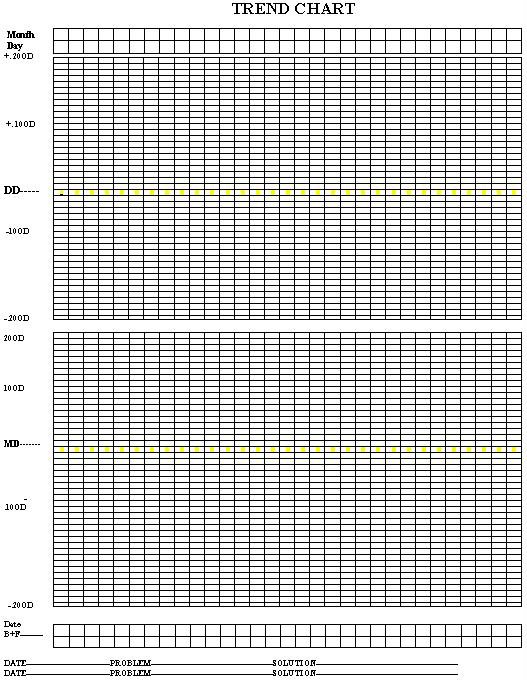
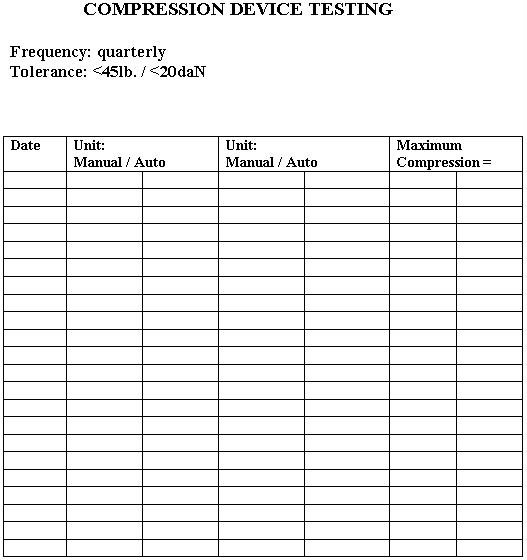
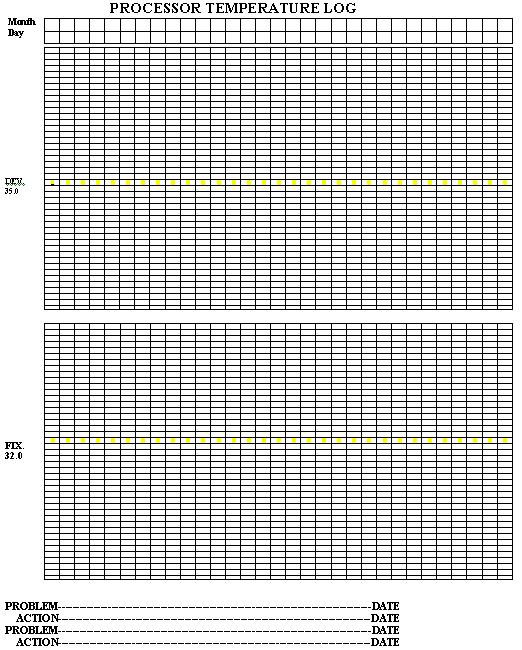
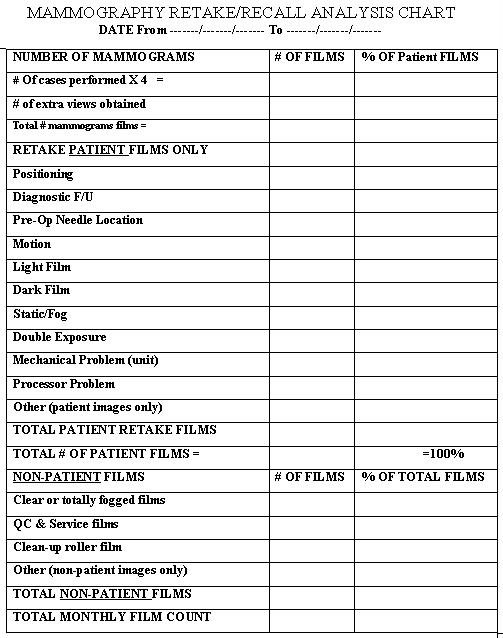
QC CHARTING: CHARTS, LOGS AND LISTS; OH MY!

We spend much of our time charting parameters for quality control. We get the charts from many sites. We copy them out of the Accreditation manual, the film company’s handouts, seminar notes, the physicist’s reports; we get them virtually everywhere.

They are all excellent but not always customized exactly for our facilities needs. I was always adding a line, a note, a parameter, a category or a factor. I started to develop my own charts that more closely reflected our needs. With today’s easy access to document manipulation this is easy and makes life simpler in the morning when most of the QC is accomplished with patients pacing in the waiting room, tapping their collective toes and breathing down your neck.

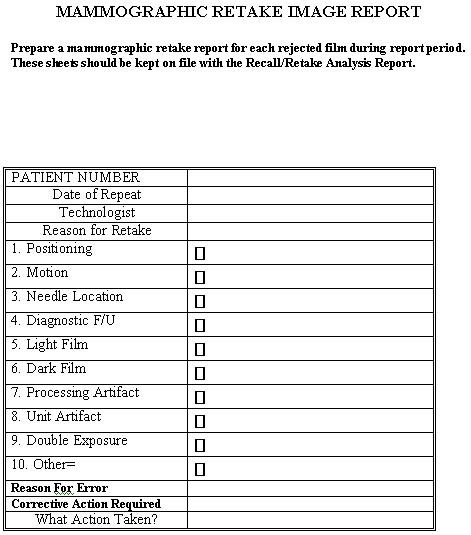
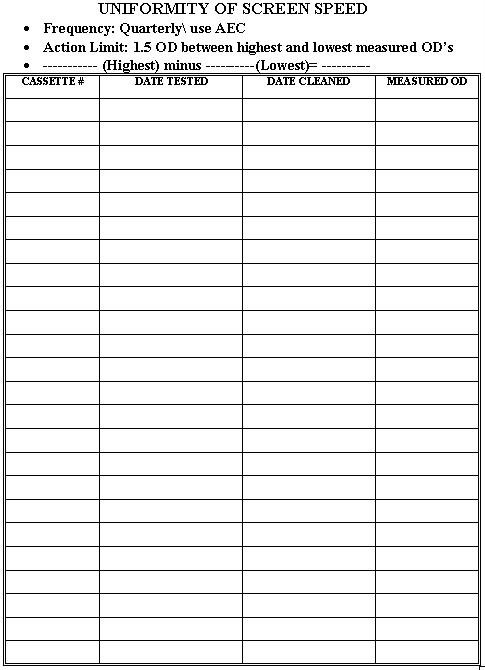
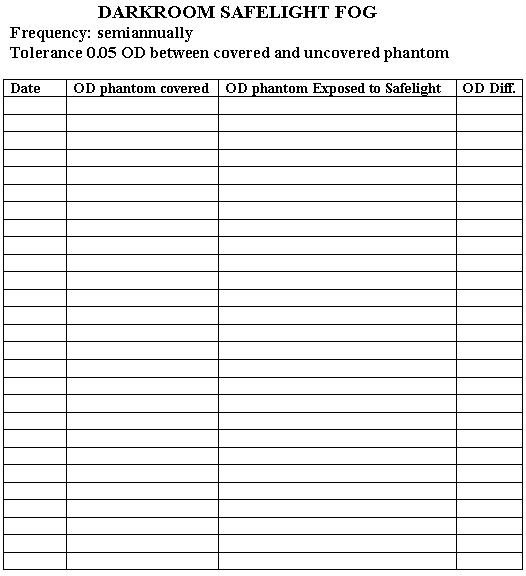
Here are a few of my custom charts. Copy them if you want, peruse them for ideas for developing your own documents or just look, change, imitate and employ.

THE CHARTS:
  1. Trend charts
  2. Fixer retention log
  3. Daily optical density
  4. Compression test
  5. Processor temperature log
  6. Recall/retake analysis
  7. Retake image sheet
  8. Screen speed uniformity
  9. Film/screen contact
  10. Darkroom safelight fog test
  11. Darkroom white-light fog test
  12. Year-at-a-Glance


FIXER RETENTION HYPO-TEST


SUMMARY:
We are the thin line between perfection and adequacy. It is up to us how to best implement the many tests, checks and balances that make up a good Quality Control Program. Our facilities are unique and our charts and logs should reflect that. Use these as a guide and be creative. Good luck and don’t be shy about changes that improve the effectiveness of your work.